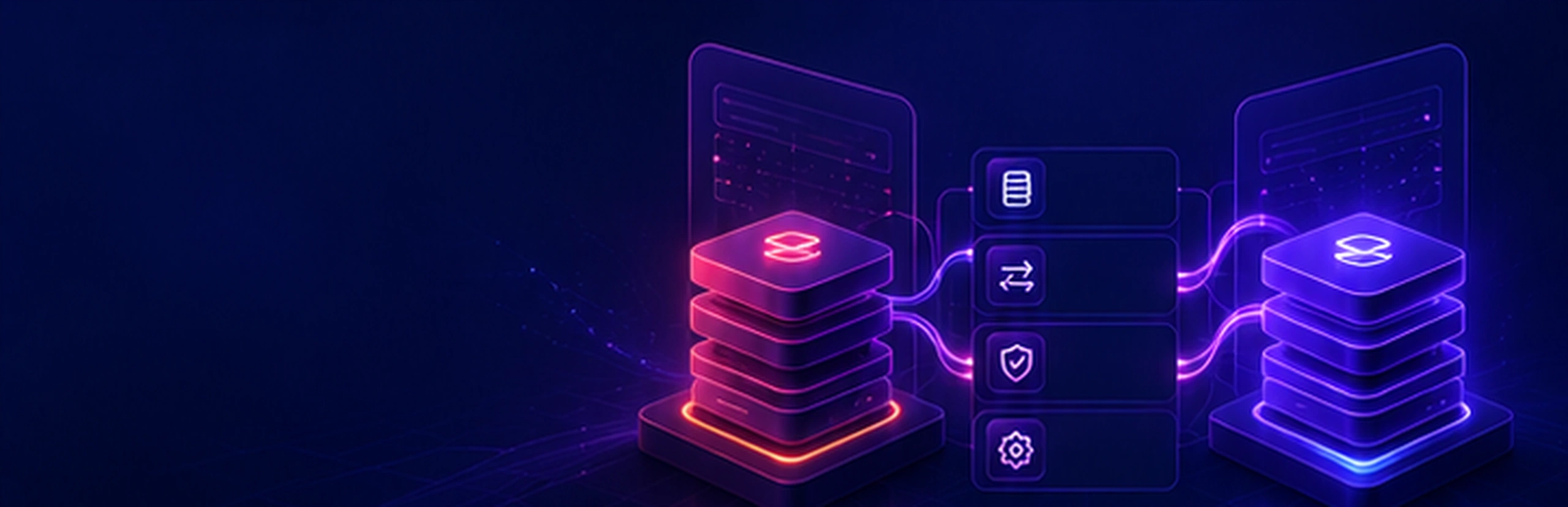
Current platform
- Players
- Balances
- Agent hierarchy
- Configuration
- Integrations

Migration
Moving to a new platform should not mean rebuilding your business from zero.
Vantera structures the migration around the players, balances, integrations, roles and workflows your operation already depends on.
Plan your migrationTRANSITION BLUEPRINT

Scope the transition before anything moves.
Map player, account and operational data into the target environment.
Validate balances and financial states before cutover.

Move through an agreed transition window with checks and fallback planning.
OVERVIEW
Platform migration is not simply a database transfer.
It is the controlled movement of an existing operation from one technology environment to another while preserving the business logic that already works.
That can include player accounts, balances, account states, verification data, transaction history, provider connections, payment flows, agent structures, brand configuration and operational settings.
Vantera approaches migration as a structured transition: first map the current environment, then define what can move, what needs to be rebuilt or reconnected, how the target model should work and how the final cutover will be validated.
The exact scope depends on the source platform, available exports, existing contracts and the target operating model.
Final migration scope is defined after assessment.
Before a migration timeline is agreed, Vantera reviews the current platform, data structure, integrations and operational dependencies.
The purpose is to identify what can be transferred directly, what requires transformation, what must be reconnected and what may need a new operating approach on the target platform.
Existing operation and dependencies
Data, integrations and workflows
Source-to-target relationships
Configured Vantera environment
Test data, balances and integrations
Controlled production transition
Review exceptions and live operation
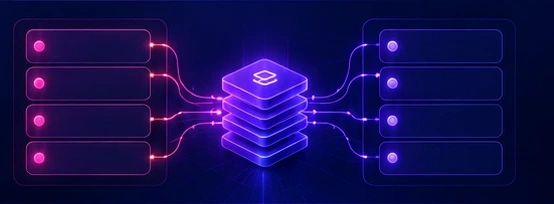
Vantera maps source data into the target platform model before the main transfer begins.
Player states, balances, identifiers, hierarchy relationships, verification states and operational settings should not be assumed to match automatically between two different systems.
Anything that cannot be mapped cleanly should be identified before cutover rather than discovered after launch.
Player ID
identity mapping
Vantera account
Balance
reconciliation
opening balance
Agent relation
hierarchy mapping
Vantera network structure
Verification state
compatibility review
target account state
Illustrative mappings — subject to assessment.
Before cutover, financial states need to be reconciled between the source and target environments.
That means comparing balances, currencies, account states and relevant transaction positions so the opening state on the new platform matches the approved migration scope.
A strong migration plan identifies the difficult parts before the production switch.
The source platform may not provide every required field or historical record.
Financial states must be reconciled before the new environment becomes authoritative.
Some KYC or verification evidence may not be transferable between systems.
Platforms can represent active bonuses, restrictions and promotional states differently.
Game, Sportsbook and payment relationships may require approval, new credentials or reconnection.
Deposits, withdrawals and other active financial states need explicit handling during cutover.
Migration validation should happen before the final switch.
Vantera can structure pre-cutover checks around sample data, mapped account states, integrations and financial positions so problems are found before the production environment becomes dependent on the new platform.
PRE-CUTOVER CHECKS
The final transition should follow an agreed sequence with clear ownership, validation checkpoints and stop conditions.
The exact cutover model depends on the source platform, migration scope, transaction states and operating requirements.
Confirm the final migration dataset and operational state.
Take the agreed source data snapshot.
Verify financial and critical account states.
Load the approved migration scope into the target environment.
Check the migrated operation against agreed acceptance criteria.
Move production traffic according to the cutover plan.
Review the live environment and migration exceptions.
Confirm the next steps for the old platform after stabilization.
If the agreed acceptance criteria are not met, the team needs to know in advance whether the transition pauses, rolls back or proceeds with approved exceptions.
Proceed
Pause / Rollback
Proceed with monitoring
A platform is only one part of the business.
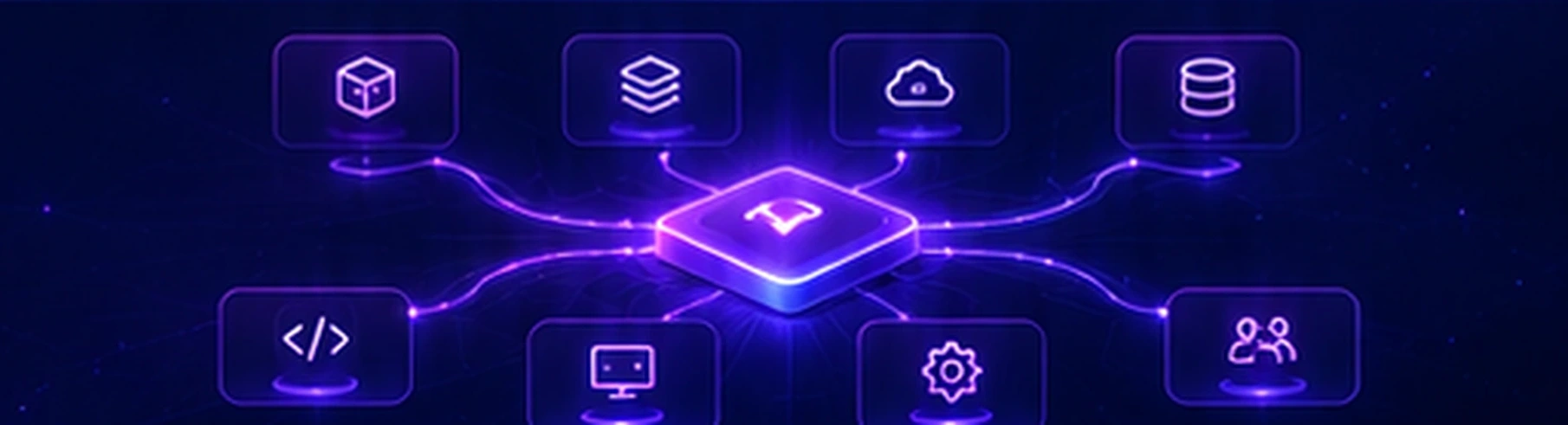
Migration planning should also account for the structures and relationships your teams already rely on every day.
Preserve hierarchy relationships and responsibilities.
Reconnect the payment model the operation depends on.
Rebuild or reconnect required content integrations.
Map operational access into the target model.
Preserve the logic required for each GEO.
Retain the visibility teams need to operate.
Move brands and domains into the target environment.
Protect the day-to-day processes built around the current platform.
Who is Migration for?
Review the current platform, data, contracts and dependencies.
Define the source-to-target data and operating model.
Configure the target platform and reconnect required services.
Test sample data, balances, account states and integrations.
Confirm financial and operational states before launch.
Execute the agreed production transition sequence.
Review the new environment and resolve approved exceptions.
Tell us what you run today, which parts of the operation need to move and what is driving the change.
We’ll help structure the migration scope before you commit to the transition.
Tell us what platform you use today, which data and integrations need to move and what the target operation should look like.
Our team can review the current setup and help define the right migration path.
Contact Vantera
Share only the contact details you want Vantera to use.